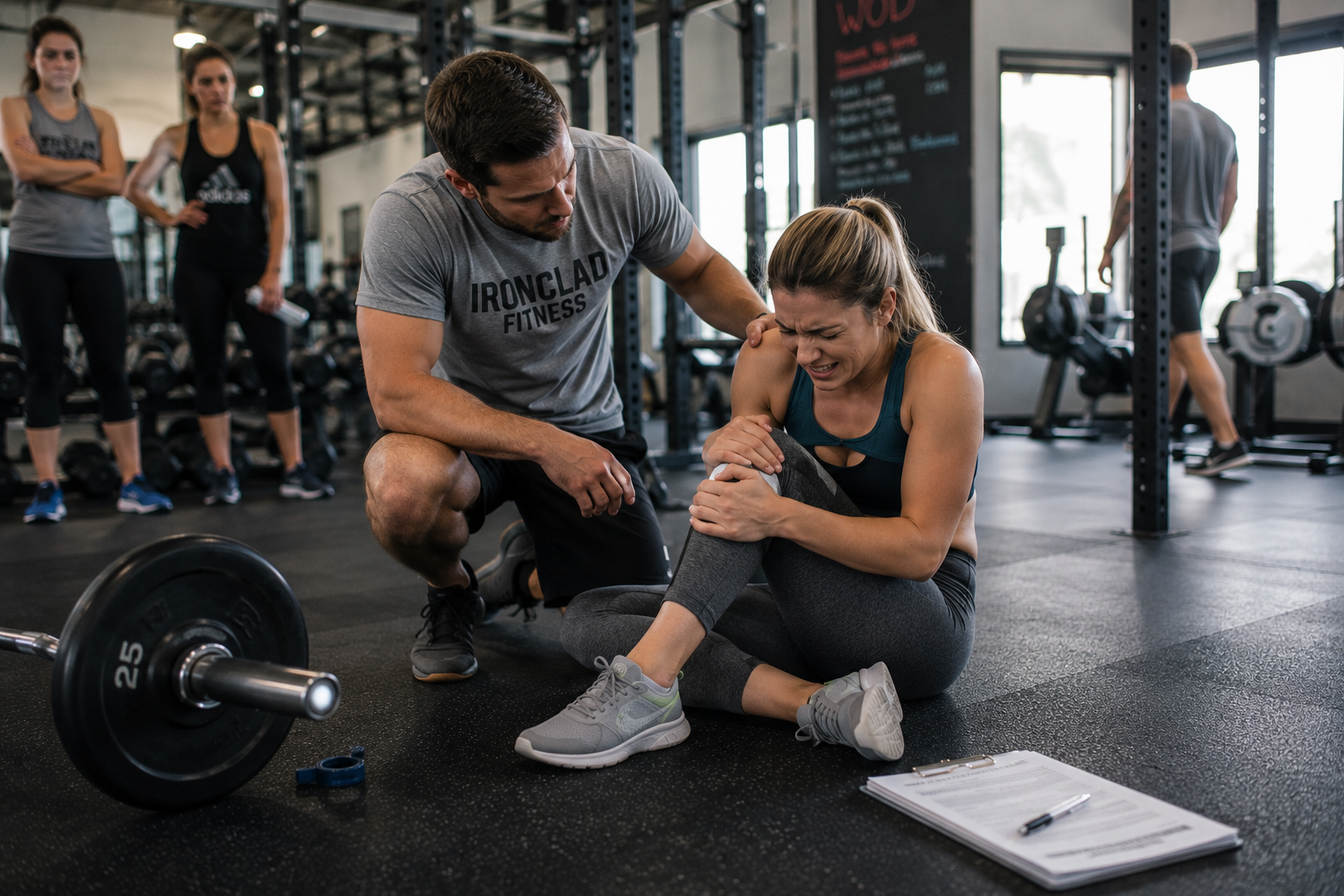
Liability waivers are a standard part of operating a gym. Before a new member touches a treadmill, picks up a dumbbell, or participates in a training session, there’s a good chance they’ve already signed an agreement acknowledging that exercise involves risk. So, if that member gets hurt, the waiver protects your gym. Right?
Not necessarily.
A waiver can be an important part of protecting your business, but it doesn’t make your gym immune from liability. And depending on how an injury happens, the insurance coverage designed to protect your business can also change. For a gym owner, that’s where things get interesting.
Consider Three Different Injuries
Imagine three members are injured at the same gym.
Scenario #1: A Member Drops a Weight
A member is performing a dumbbell press, loses control of the weight, and injures their shoulder. There was nothing wrong with the equipment. No employee caused the accident. The member was simply exercising and got hurt. This is exactly the type of inherent risk that liability waivers are intended to address.
But now let’s change the facts.
Scenario #2: A Piece of Equipment Fails
Another member is using a cable machine when the cable unexpectedly breaks, causing the member to fall backward and suffer a serious injury. Now the questions are different. Was the equipment properly maintained? Had employees noticed damage to the cable? Was an inspection missed? Was there a defect in the equipment itself?
The member may have signed a waiver acknowledging the normal risks associated with exercising, but a claim alleging that the gym failed to properly maintain its equipment introduces an entirely different liability issue. That’s where your General Liability Insurance becomes extremely important. General Liability is designed to protect the gym against covered claims involving bodily injury or property damage for which the business is legally responsible.
But there’s another scenario that gym owners shouldn’t overlook.
Scenario #3: The Trainer Gives the Instruction
A personal trainer is working one-on-one with a member. The trainer instructs the member to perform an exercise using a particular weight and technique. During the exercise, the member suffers a serious injury. The member alleges that the trainer used improper technique, selected too much weight, or instructed them to perform an exercise that wasn’t appropriate for their ability.
That’s no longer simply: “Someone got hurt at the gym.” The allegation is: “A professional working for the gym gave me improper instruction, and that instruction caused my injury.” That distinction matters.
General Liability and Professional Liability Aren’t the Same Thing
This is one of the insurance distinctions a gym owner should understand. General Liability addresses covered bodily injury and property damage claims arising from the operation of the business. Think about things such as a customer slipping on a wet floor or allegations that improperly maintained gym equipment caused an injury.
Professional Liability addresses claims arising from the professional services, advice, or instruction you provide. For a gym with personal trainers, coaches, instructors, or fitness professionals, that’s an important difference. If the allegation is that your trainer’s professional instruction caused the injury, General Liability alone may not be the coverage designed for that exposure.
That’s why simply having “liability insurance” doesn’t necessarily tell you whether your gym is properly protected.
So What About the Waiver?
The waiver still matters. A properly drafted and enforceable waiver can be an important layer of protection because it establishes that the member understood and accepted certain risks associated with the activity. But think about what a waiver shouldn’t become: Your entire risk-management strategy.
There’s a significant difference between a member accepting the normal risks associated with lifting weights and a member alleging that your business caused an injury through negligent maintenance or improper professional instruction. And whether a waiver ultimately protects the business depends on the facts, the language of the agreement, and applicable state law.
That’s why insurance still matters even when every member signs one.
One Injury Can Create Several Questions
When someone gets hurt inside a gym, the first question shouldn’t simply be: “Did they sign the waiver?” There are several questions worth asking:
-
What actually caused the injury?
-
Was the gym allegedly negligent?
-
Did equipment fail?
-
Was professional instruction involved?
-
Which insurance coverage is designed to respond to that allegation?
Those questions can completely change how a claim is handled.
The Better Question for a Gym Owner
Instead of simply asking: “Do I have liability insurance?” Ask: “Does my insurance protect both the operation of my gym and the professional services being provided inside it?”
If you employ trainers or provide fitness instruction, understanding the difference between General Liability and Professional Liability is particularly important. And if you’re relying heavily on your liability waiver, make sure you understand exactly what role that waiver plays—and what it doesn’t replace.
Protect More Than the Building
Opening a gym means investing in equipment, employees, trainers, and a place for people to improve their health and fitness. But your biggest exposure isn’t necessarily the equipment sitting inside the building. It’s what happens when people use it.
A member can accept the normal risks of exercise and still allege that your business did something wrong. Understanding the relationship between your waiver, General Liability, and Professional Liability can help you make better decisions about protecting the business you’re building.
At Resilient Risk, we believe informed business owners make better insurance decisions because understanding your coverage is just as important as having it. Reach out to our agency for more information on how to ensure your gym is comprehensively protected.